
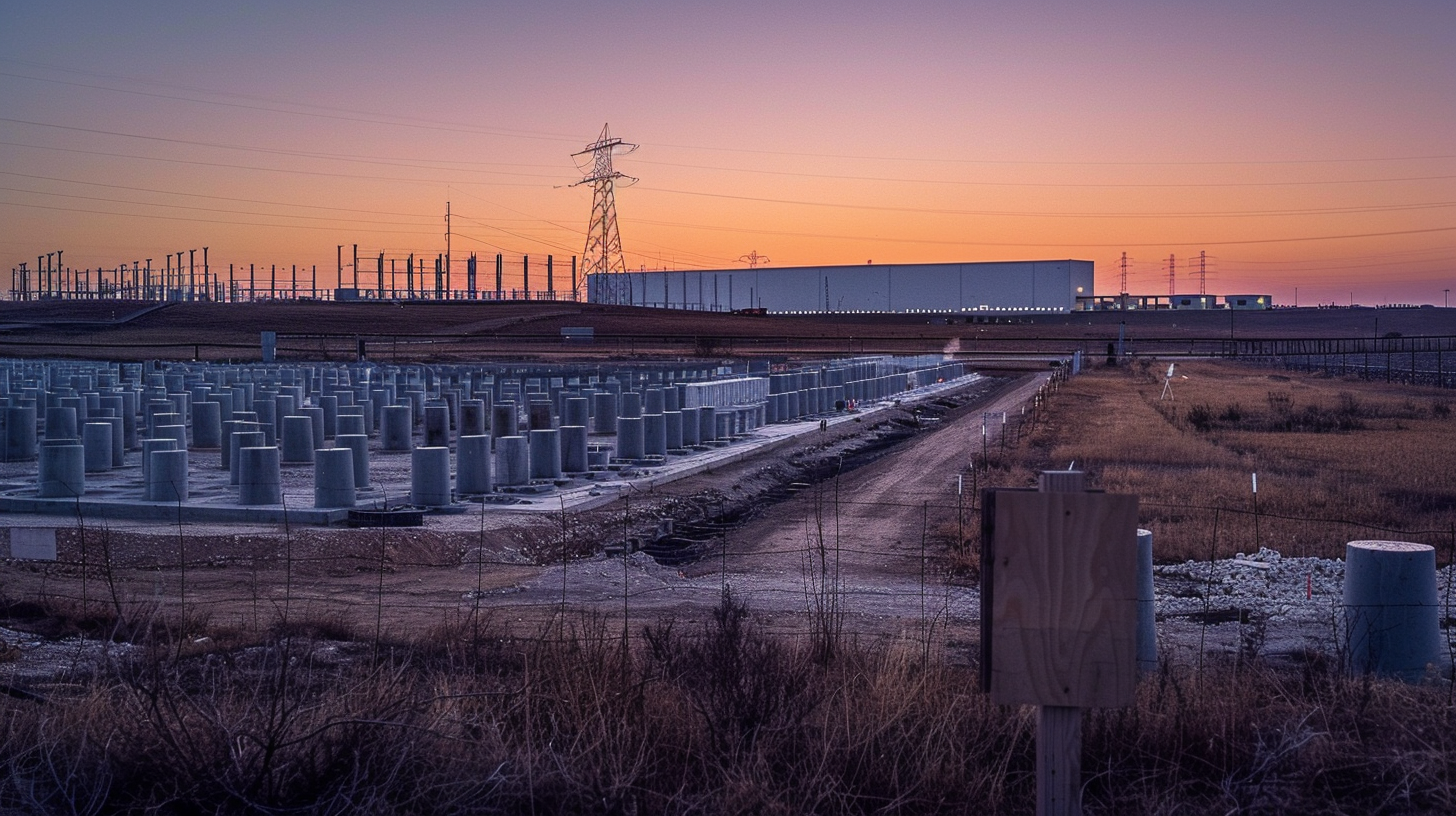
Governor Greg Abbott’s deadline for regulators to spell out how they will keep data-center costs off Texans’ electric bills arrives Friday, but the state’s push to rein in the industry is running into a problem it cannot regulate away: the calendar. Under a June 10 directive to Public Utility Commission Chairman Thomas Gleeson and ERCOT CEO Pablo Vegas, the two agencies must deliver a joint memorandum to the governor’s office by July 17 identifying actions and legislative recommendations to “ensure everyday Texans are not burdened with the costs of infrastructure driven by data center expansion.”
The PUC must also begin acting to cut residential transmission costs by July 31.
The memo lands as a wave of large loads moves toward the grid faster than the Legislature can write rules for it. ERCOT is expected to approve its “Batch Zero” interconnection plan around April 2027, clearing a queue of data centers that could request a combined 100 gigawatts — roughly the power for 25 million homes, in a state with about 12.6 million households as of 2024, according to E&E News.
Analysts cited by the outlet expect actual Batch Zero demand closer to 20 to 50 gigawatts. Many of those projects were set in motion before Texas wrote guardrails, and some are already under construction.
That sequencing is the crux. Because the Legislature does not reconvene in regular session until January 2027, the earliest a new data-center bill could take effect is April or May 2027 — and only with a two-thirds vote to expedite it, said Chris Kirby, a data-center attorney at Balch & Bingham, in comments to E&E News.
“Even in that case, the Batch Zero studies would be finished,” Kirby said, predicting that most 2027 rules would not reach those projects. Building requirements such as setbacks or water-efficient cooling would likely miss the first wave; usage-reporting rules stand a better chance of applying.
The gap matters. Under this scenario, Abbott’s legislative asks — codifying that data centers “add to Texas’s electric capacity”, fund their own infrastructure, report water and power use, and repeal outdated sales-tax exemptions — wouldn’t take effect until after the first batch of projects is approved. Under the current rules, ERCOT could approve projects that don’t add to electric grid, and, instead, are pushing all their energy demand on to the current grid.
The risk in the timing is that the largest early loads connect under the old, extractive terms, shifting grid and water strain onto ratepayers before the additive rules exist. Texas residential electricity prices already rose about 30% from 2020 through 2025, according to the Texas Energy Poverty Research Institute.
Cameron Poursoltan of the Data Center Coalition told E&E News that re-regulating projects already under development “would create precisely the kind of uncertainty and unpredictability that harms investment.”
Public sentiment is running the other way, however: a June Texas Politics Project poll found 56% of Texans oppose data-center construction in their communities, rising to 62% among rural residents. The friction underlying all of this is Senate Bill 6, whose §25.194 large-load interconnection rule (PUCT Project 58481) is pending final adoption after an April comment period — coverage The Texas Dispatch has tracked since Batch Zero took effect.