
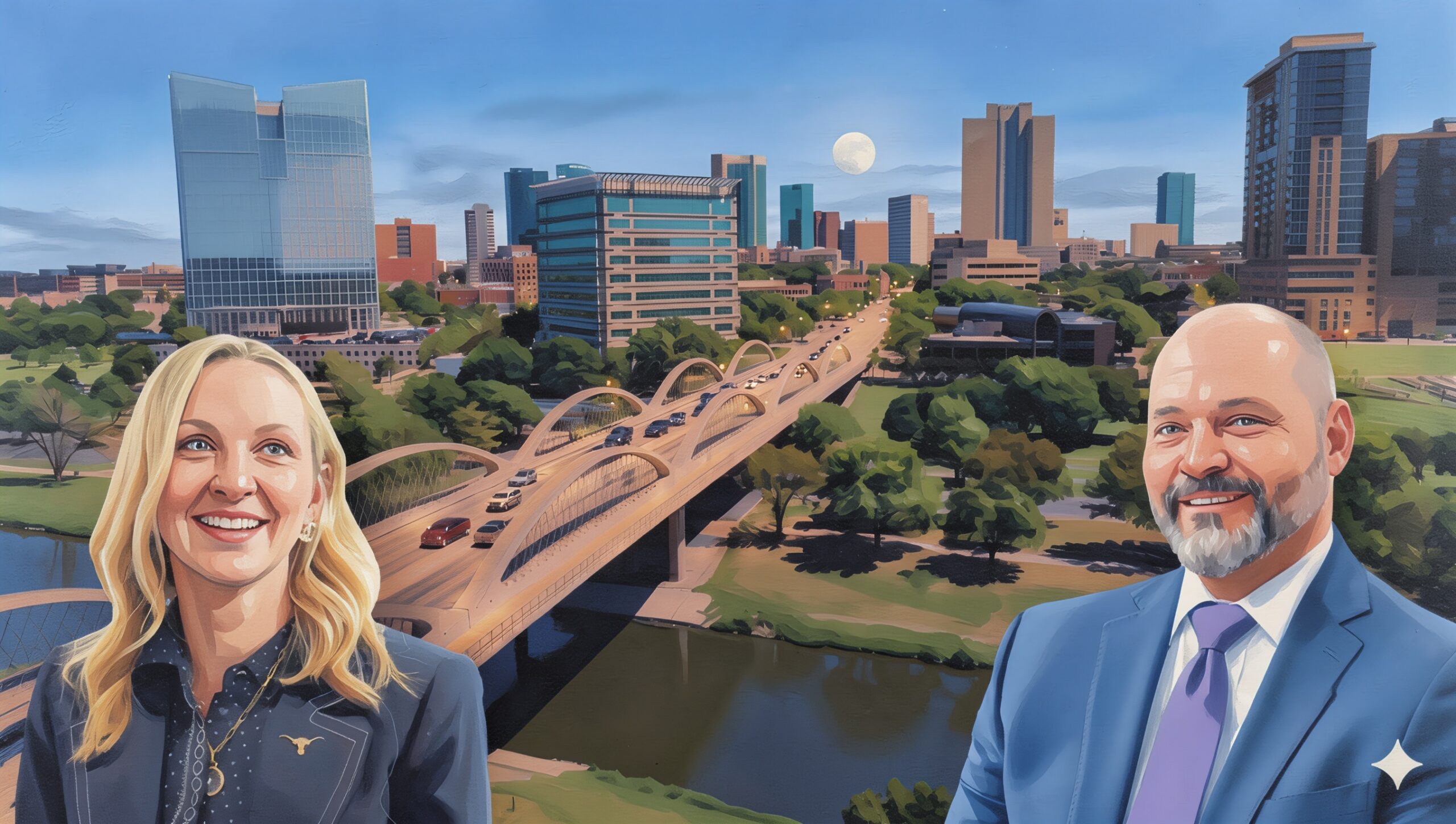
As Texas approaches its bicentennial in 2036, the state’s economic and population growth are no longer just numbers on a spreadsheet; they are the backdrop of everyday life for 31.7 million residents. In a candid installment of the Future of Texas podcast, Fort Worth Mayor Mattie Parker and Texas 2036 Executive Vice President A.J. Rodriguez discuss what it takes to ensure the “Texas Miracle” translates into a “positive awareness around raising children” and building stable, hopeful lives.
Their assessment is a call to action: growth alone isn’t success if it doesn’t work for the unit at the core of the state’s identity—the family.
A.J. Rodriguez, whose family has called San Antonio home for six generations, emphasizes that the lens of family is essential because “it’s not just about data”. While Texas 2036 is a “data-driven” organization, Rodriguez argues that policymakers must look at the “faces behind the data” to ensure prosperity is truly reaching those it is intended for.
“Raise a family is a critical element and ingredient in that formula for us,” Rodriguez explains, noting that the goal is for each subsequent generation to have “more opportunities than the next one”.
Mayor Parker, who at 37 became the youngest mayor of a major U.S. city, uses her “busy season of life” as a mother of three to guide her leadership. She views the family unit as the ultimate metric for policy success.
“If Texas is going to remain the best place to live, work, and raise a family, that promise has to show up in real life,” she says.
The conversation begins at the very start of the family lifecycle. Despite the state’s economic prowess, Parker and Rodriguez acknowledge that Texas faces some of the “worst outcomes for maternal health in the country”.
“I want to be the state… where we take care of our moms and babies the best anywhere in the world,” Parker asserts, “and we’re not there yet”.
She highlights the Tarrant County Maternal Health and Infant Coalition as a potential statewide model. The group has already secured over $23.5 million to address critical gaps, such as providing free iron supplements to prevent postpartum hemorrhaging—an intervention that can improve outcomes by up to 50%.
Rodriguez notes that the state is beginning to respond, citing recent legislation that extended postpartum care coverage from two months to 12 months. “It’s really critical because we have this significant population that is essentially our future,” he says of the 7.7 million Texans under the age of 18.
As more domestic migrants flock to Texas, the “affordability” question has become the primary stress point for families. Rodriguez points to several staggering figures that define this struggle:
Childcare: Costs now average $11,000 per year per family, often forcing a choice between “childcare and rent”.Health Insurance: 17% of Texans remain uninsured, the worst rate in the country.
Housing: Average home prices have surged 40% in just five years, with the median value now reaching approximately $330,000.
Mayor Parker warns that “NIMBYism” (Not In My Backyard) and inflation are partly responsible for these costs, but she argues that city governments must stay focused on the “basics” to keep communities attractive.
“American cities that aren’t paying attention to the basics… they’re the ones that are losing population,” she says, listing police, firefighters, streets, and even timely trash pickup as the bedrock of quality of life.
Perhaps the most significant long-term variable for Texas families is the “human capital pipeline”. Parker and Rodriguez agree that while you can “import talent” from other states, you “can’t export poverty”—meaning Texas must better educate its own children to fill the high-paying jobs of tomorrow.
The current data shows a significant gap: while 90% of Texas kids graduate high school, only about 30% earn a post-secondary credential within six years. By 2036, an estimated 70% of jobs in Texas will require such a credential.
Parker highlights the “Tarrant To and Through” (T3) partnership as a solution, which aims to get students into “family-sustaining wage jobs” by focusing on certifications and two-year degrees as much as traditional four-year paths.
“If someone is educated and has a great paying job, they have access to health care… they can afford a house… and all of these problems start to sort of dissipate,” Parker says. “It’s not the silver bullet, but it is the answer”.
Ultimately, the future of Texas families will be decided by what Parker calls the “happiness quotient”. This includes the built environment, such as the goal of a “ten-minute walk to a park” for all residents, clean air, and safe neighborhoods.
“Are they also having fun as a family?” Parker asks. “What’s more important than being happy?”.
As Texas moves toward 2036, the vision shared by these leaders is one of “intentionality”. Whether it is the state legislature addressing housing affordability or local coalitions saving the lives of new mothers, the goal is to ensure that the Texas of the next decade is a place where families don’t just survive the growth—they thrive in it.