
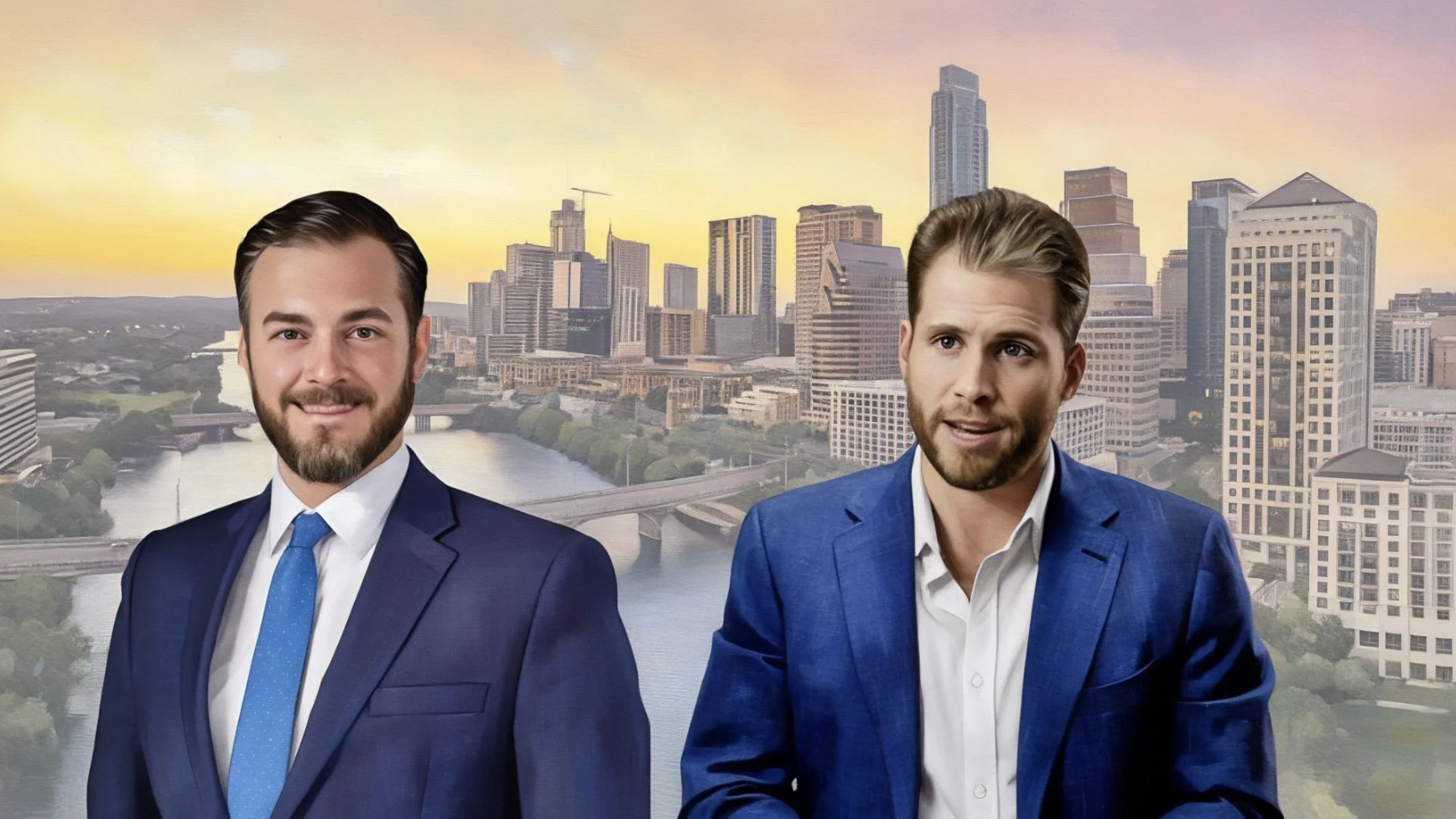
As Texas approaches its bicentennial in 2036, the state’s economic trajectory is increasingly defined by its emergence as a global hub for technological advancement. This shift is driven by a “massive migration of intellect” as entrepreneurs and investors relocate to the Lone Star State, drawn by a regulatory environment designed to spur development of the next big idea.
In the first episode of the Future of Texas podcast series, venture capitalist Joe Lonsdale—founder of the Cicero Institute and co-founder of Palantir Technologies—joined John Hryhorchuk, Senior Vice President of Policy and Advocacy at Texas 2036, to map out the state’s trajectory. Their conclusion is clear: Texas is no longer just a fallback for California refugees; it is a preeminent incubator of innovation that is currently way ahead of most of the rest of the country.
The data backs up the bravado. While California’s growth slowed to an annualized rate of 1.2% in early 2025, the Texas economy surged at a 6.8% clip—nearly double the national average. This momentum is fueled by what Hryhorchuk calls the “massive migration of intellect”.
“When people move here, they’re coming with their life experiences, their education, their talents,” Hryhorchuk explains. “However, they’re not coming with their water. They’re not coming with energy. They’re not coming with the infrastructure necessary to sustain the growth”. This reality creates a paradox: Texas is winning because people are coming, but it can only keep winning if it builds the systems to support them.
Lonsdale, who famously swapped Silicon Valley for Austin, sees a cultural edge in the Texas spirit as well. He points to a “bold kind of individualist entrepreneurial spirit” rooted in the state’s history. “I think it created this culture that really admired independence and likes strong-willed, bold characters,” Lonsdale says.
However, being “ahead” doesn’t mean Texas will succeed. Lonsdale, specifically warns of “systemic threats” that could stall the Texas miracle– an ever-present collision between innovation and established institutions. To level the playing field, Lonsdale says that Texas must “legalize innovation and competition.”
As an example of this tension, Lonsdale focuses on health care. “The health systems use cartel power and they block you from competition,” Lonsdale claims, noting that some work to prevent AI-driven efficiencies. With the average family health insurance premium reaching approximately $36,000 against the median wage, Hryhorchuk agrees these pressures have a “dampening impact on overall wage growth”.
Equally concerning to Lonsdale is the resurgence of aggressive litigation. He notes that “trial lawyers are sneaking in on both sides… doing all sorts of crazy judgments again that ruined the state in the 90s”. Fixing the business courts was a start, but the fight for “pro-liberty values” remains a daily battle for the future of the state, according to Lonsdale.
Innovation today requires more than just good policy; it requires energy. While Texas already produces more energy than any other state, the reliability of the energy grid and future demand remain a top concern for Texans. And the AI revolution is hungry for more. Lonsdale says part of the solution is companies like Base Power, founded by Zach Dell, which is deploying “billions of dollars of batteries” to make the Texas grid more resilient.
The conversation also turns toward a “new nuclear era”. Lonsdale mentions state incentives, including a potential “$100 million bonus” for the first person to get a small modular reactor (SMR) up and running. “We should be encouraging all this here,” he says, emphasizing that grid stability is the bedrock of a “wealthier society”.
Although these data centers are sometimes viewed with skepticism, Lonsdale says they are “essential infrastructure” for 21st-century competition. “If I cannot use the data centers, I have to build it somewhere else,” he notes.
Perhaps the most complicated part of the innovation puzzle is the “human capital pipeline”. Hryhorchuk points to a staggering statistic: some Austin high schools see only 10% of students performing math at grade level.
The solution, according to both men, is accountability. They cite the “takeover of Houston ISD” as a potential model for the “greatest urban education turnaround in American history”. Lonsdale is a staunch supporter of the school choice movement, arguing that “Texas is going to be a center of new schools if we can keep scaling choice”.
He also advocates for a radical shift in how higher education is funded, moving toward “outcomes-based funding”. “All of a sudden they start teaching skills that matter,” Lonsdale says of technical schools already using this model. He is less enthusiastic about traditional universities, which he claims are often “completely against Texas values,” arguing that taxpayers shouldn’t fund systems that don’t lead to good jobs.
So, what will Texas look like in 10 years? If Lonsdale has his way, the Texas Triangle—Dallas, Houston, San Antonio, and Austin—will be connected by a network of tunnels and autonomous vessels.
“We are going to get flying cars,” Lonsdale states confidently, citing his investment in Joby Aviation. These vehicles, he says, will be “hundred times quieter than helicopters” and eventually fully autonomous.
Hryhorchuk envisions a future where “pain points” become “joy”. He imagines a 45-minute commute on I-35 where an autonomous car allows a parent to face their children instead of the road. “You’re interacting with your children and creating positive memories,” he says. “That future is out there. It’s not that far”.
The road to 2036 is paved with both “opportunity” and “nonsense”. To maintain its lead, Lonsdale argues Texas must “crack down on the city’s nonsense,” fix its infrastructure, and “teach agency” to the next generation.
“As an entrepreneur today, there’s more opportunity than there ever has been before in the history of the world,” Lonsdale concludes. “You just have to have energy and interest and just go and solve problems”.
In the eyes of these two leaders, the “Texas Miracle” isn’t a finished product—it’s a prototype, and the final version is currently being built in the labs, data centers, and schools of the Lone Star State.
Want the news delivered straight to your inbox?
The top news stories covering Texas government will be delivered to your inbox weekly