
In the middle of the rapid growth of Texas, a new titan is emerging. It isn’t a single city, but an interconnected network of metropolitan powerhouses known as the Texas Triangle. As the state moves toward its bicentennial in 2036, the boundaries between Dallas-Fort Worth, Houston, and the Austin-San Antonio corridor are effectively dissolving, creating what experts call a “megaregion.”
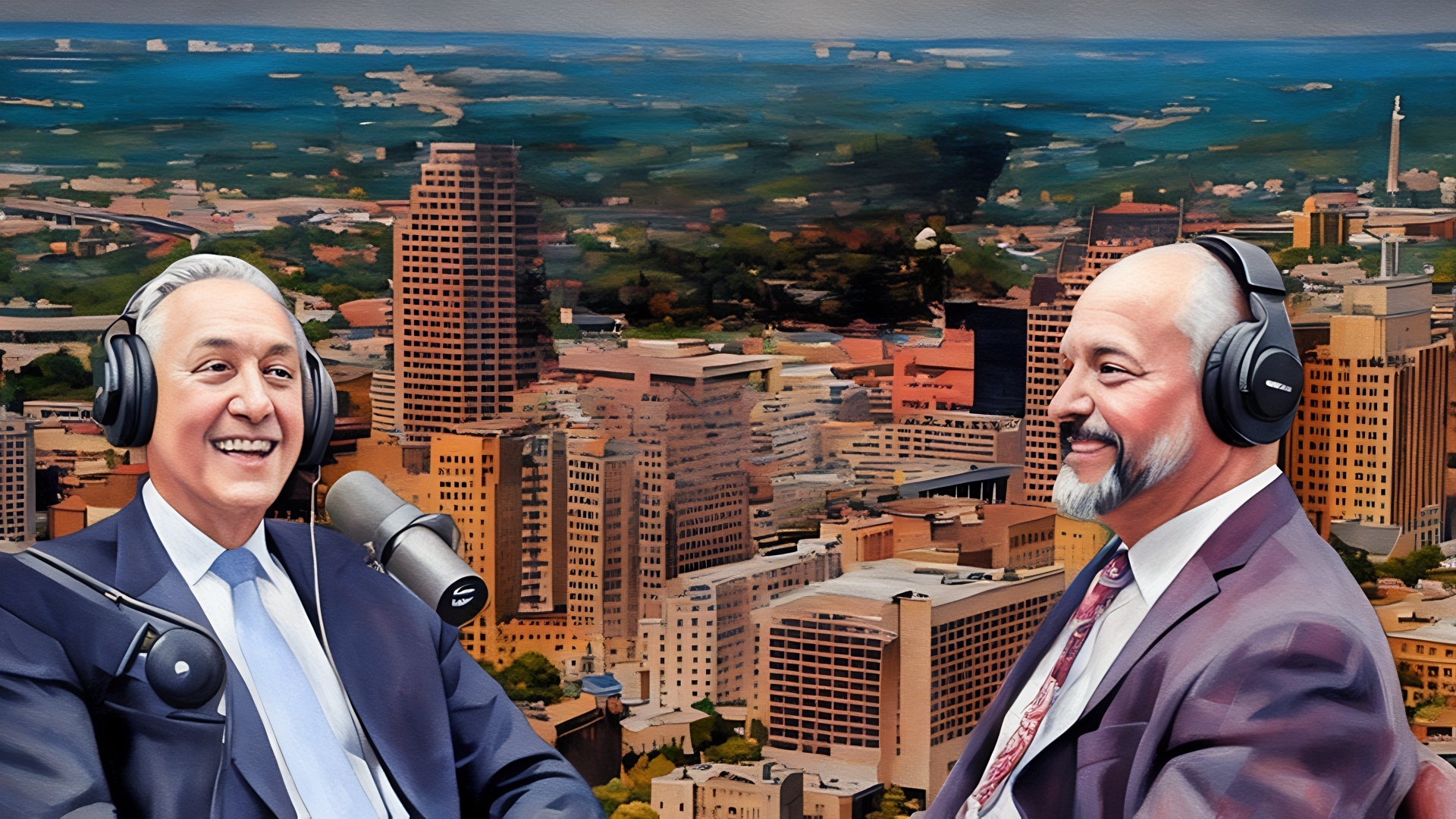
In the latest episode of the Future of Texas series, former U.S. Secretary of Housing and Urban Development and San Antonio Mayor Henry Cisneros joined Texas 2036’s A.J. Rodriguez to map this new reality. Their discussion, centered on the evolution of these massive urban systems, paints a picture of a state that is no longer growing “one city at a time” but as a singular, high-functioning economic engine.
A megaregion is defined not just by size, but by how multiple metros begin to function as one connected system. For Texans, this means talent and jobs are no longer confined to a single downtown core. Instead, residents move through a landscape where housing, infrastructure, and opportunity are shared across regional lines.
Cisneros, who co-authored the book The Texas Triangle, describes this phenomenon as a fundamental shift in the state’s identity. From 2010 to 2023, the Triangle captured nearly 87% of all Texas population growth. Current projections suggest that by 2050, the four major metro areas within the Triangle will house nearly three-quarters of the state’s total population.
“Texas isn’t growing one city at a time anymore,” Rodriguez notes. The data supports this: from July 2024 to July 2025, the Houston and Dallas areas each added over 120,000 residents, while the combined Austin-San Antonio region added 92,000—a figure that would rank it third nationally if it were a single metro.
The most visible transformation is occurring along the I-35 corridor. Cisneros frequently uses a striking comparison to illustrate the scale of growth in Central Texas: over the next 25 years, the region is expected to add three million more people—the equivalent of adding the entire city of Chicago to the corridor.
This growth is most pronounced in the suburban counties—like Collin, Montgomery, Waller, and Williamson—rather than the urban cores. Cities like Buda and Georgetown are offering a new hybrid lifestyle: professional opportunities linked to the big cities, but with the distinct community identity of a smaller town.
However, this rapid urbanization brings what Cisneros calls “mega-challenges.” He argues that the only sensible approach is the creation of a “regional entity” where state officials, private-sector leaders, and university experts sit at the same table to solve problems like water diversification and outdated development codes.
While Texas enjoys an abundance of natural resources and land, it faces a critical “build-speed problem”. To sustain what many call the “Texas Miracle,” the state must bridge the gap between local boundaries to build energy, water, and transportation systems at the scale its economy now operates.
Cisneros highlights transportation as a key indicator of success. While he is frustrated that state leaders didn’t prioritize a commuter train at the turn of the century, he looks toward a future defined by autonomous freight corridors, air taxi pilot programs, and perhaps even rail service from Austin to San Antonio.
“Texas could be a national exemplar of how you do quality growth and development,” Cisneros says. This vision includes creating a strong middle class and a high quality of life with open spaces, parks, and lakes—ensuring that growth doesn’t come at the cost of the environment.
The power of the Texas Triangle lies in its diverse, complementary economies. Houston-Galveston serves as the global energy capital; Dallas-Fort Worth acts as the hub for corporate headquarters and finance; and the Austin-San Antonio corridor serves as the state’s innovation and manufacturing engine.
This specialization creates a “stronger business environment” with deeper talent pools and larger markets. It also makes the state more resilient to economic shocks, as diverse industries support long-term growth across the entire megaregion.
As 2036 approaches, the Hispanic population is projected to become the state’s majority, exceeding 50% by 2035. This demographic shift, combined with an 88% projected increase in residents aged 65 and older by 2060, will fundamentally reshape the state’s workforce and health care needs.
For Cisneros and Rodriguez, the goal is clear: Texas must plan and govern at the scale of these megaregions to ensure no community is left behind by the speed of progress.
“Success in the next decade will depend on how fast the state can scale,” Rodriguez notes. If Texas can build faster than the growing demand, it will continue to capture global investment and serve as the standard for smart growth in the 21st century.