
Climbing beef prices in Texas have caused significant debates over beef imports, water, and new technologies that may reshape the ranching industry.
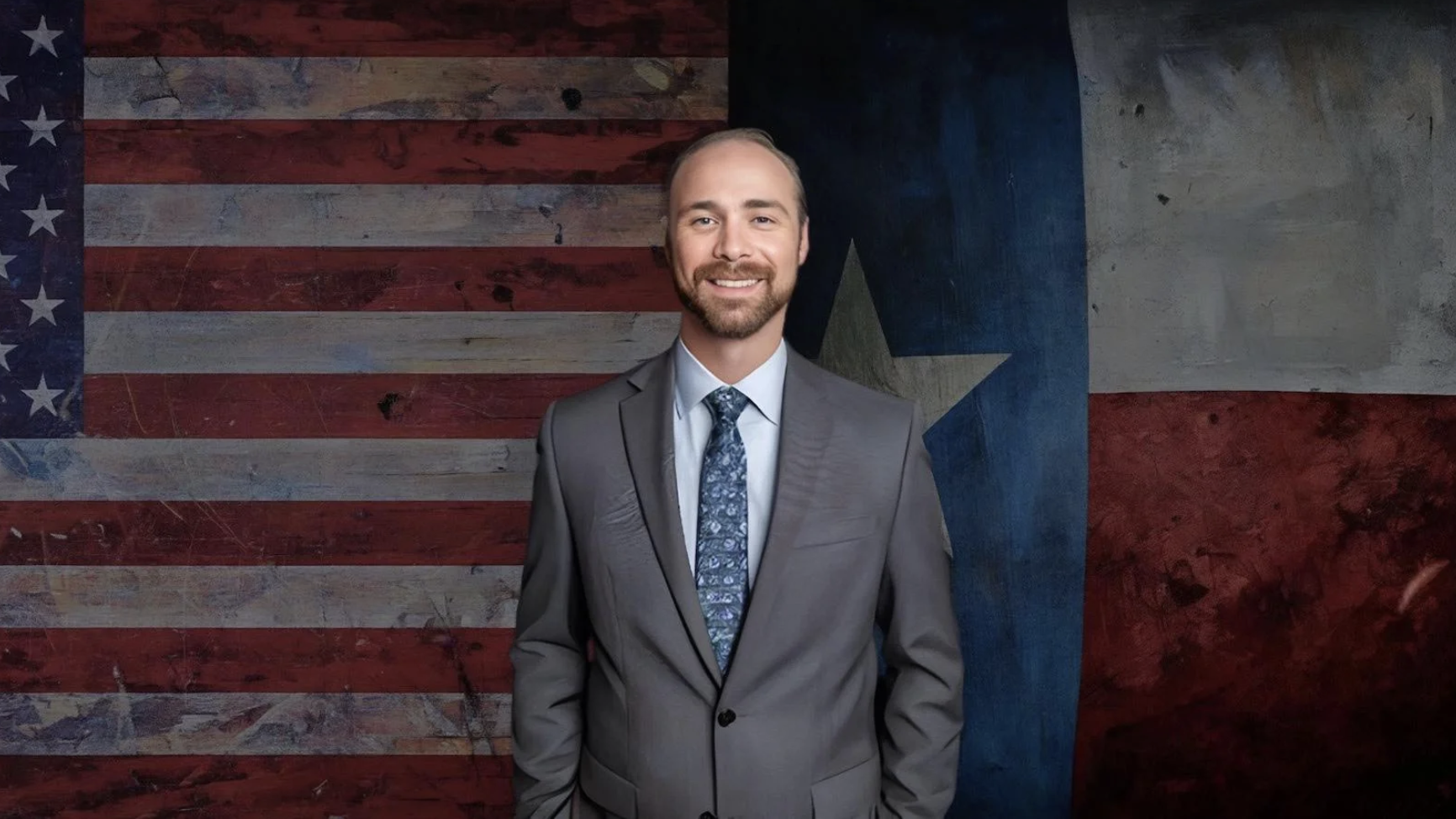
Peyton Schumann, the Executive Director of Government Relations for the Texas and Southwestern Cattle Raisers Association, says the industry needs policies that keep Texas ranchers viable and protect real beef.
Schumann, who grew up outside Coleman, Texas, graduated from Coleman High School and Texas Tech University. He worked in the Legislature on Governor Abbott’s political team, and later at the Texas General Land Office before joining Texas and Southwestern Cattle Raisers Association.
The association began in 1877 when cattlemen, like Charles Goodnight, organized ranchers to attempt to deal with incidences of cattle theft. The association still provides that service to its members today.
“We still maintain 30 special rangers that cover the entire state,” Schumann says. “The state does not pay for those special rangers. The association pays for that out of our membership dues.”
Schumann says that while he understands the frustration about inflation and rising food costs, the consumer often wrongly blames the ranchers for increased prices. “The number one consumed protein in the United States is the hamburger,” says Schumann.
He explains the supply chain and all the factors that go into raising cattle, including imports, water, disease, labeling, and state and federal policy have a big impact on prices.
Recent debates have sparked about the U.S. importing beef from Argentina when so many U.S. ranchers are struggling. Schumann says that Argentine beef is imported because the meat is much leaner. American cattle are bred for marbling so “we don’t have enough lean” meat and the addition of imports helps to keep the broader market prices stable.
Over recent years, rising fuel costs, equipment, and labor costs compounded by years of drought have pushed many ranchers out, further straining the supply chain. The recent price uptick, Schumann says, finally allowed “ranchers to basically break even for the first time in a long time.”
Another significant issue that Texas ranchers face is the availability of water. Schumann sees a real issue with exploding urban growth and the reliance of those urban centers on rural aquifers. “We can’t create rural economic deserts just to prop up the economics of urban centers,” he says.
He says another threat that concerns him even more is the New World screwworm, a parasite that devastated wildlife decades ago. “Eighty percent of the white-tailed deer population was wiped out,” he says. The pest targets “any warm-blooded animal,” and its maggots feed on living tissue. “If it is not treated or caught quickly enough, it can kill a healthy animal in seven days to two weeks.”
The only effective solution is releasing sterilized flies. A single facility in Panama produces them, but Schumann says “110 million a week” is not enough if the pest spreads north. He supports building a U.S. sterile-fly facility and helped form the Screw Worm Coalition of Texas to coordinate advocacy.
On the policy front, Schumann says that the 89th Legislature was “a huge success.” He credits Senate Bill 503 as a means of helping modernize brand registration so ranchers and law enforcement can search a statewide online database instead of driving to county courthouses to consult handwritten books. That convenience matters, he says, when a stray appears on a highway “at three in the morning.”
Senate Bill 261, the two-year ban on cell-cultured proteins for human consumption, was another priority of the association. “We do not know a lot about this protein yet, and we do not want the citizens of Texas to be the guinea pigs,” Schumann says. Companies sued the state over the law, repeating earlier fights over truth-in-labeling. He argues that if alternative products want to compete, “we have to have a level playing field” so consumers clearly understand what they buy.
Country-of-origin labeling remains contentious. Schumann supports voluntary labels like “Go Texan” but opposes mandates that create a lot of paperwork for small ranches. Mandatory labeling also triggered trade threats in the past. “Think of all the bookkeeping,” he says, noting that ranchers already track medical treatments and herd movements. He warns that retaliatory tariffs from Canada, Mexico, or other buyers of U.S. beef cuts could depress cattle prices.
Looking to the 90th Legislature, Schumann expects groundwater policy to dominate. He says he hopes lawmakers remember the people love meat. “People love a good steak,” he says, and he wants Texans to recognize the ranchers, wildlife, land, and water make that possible.