
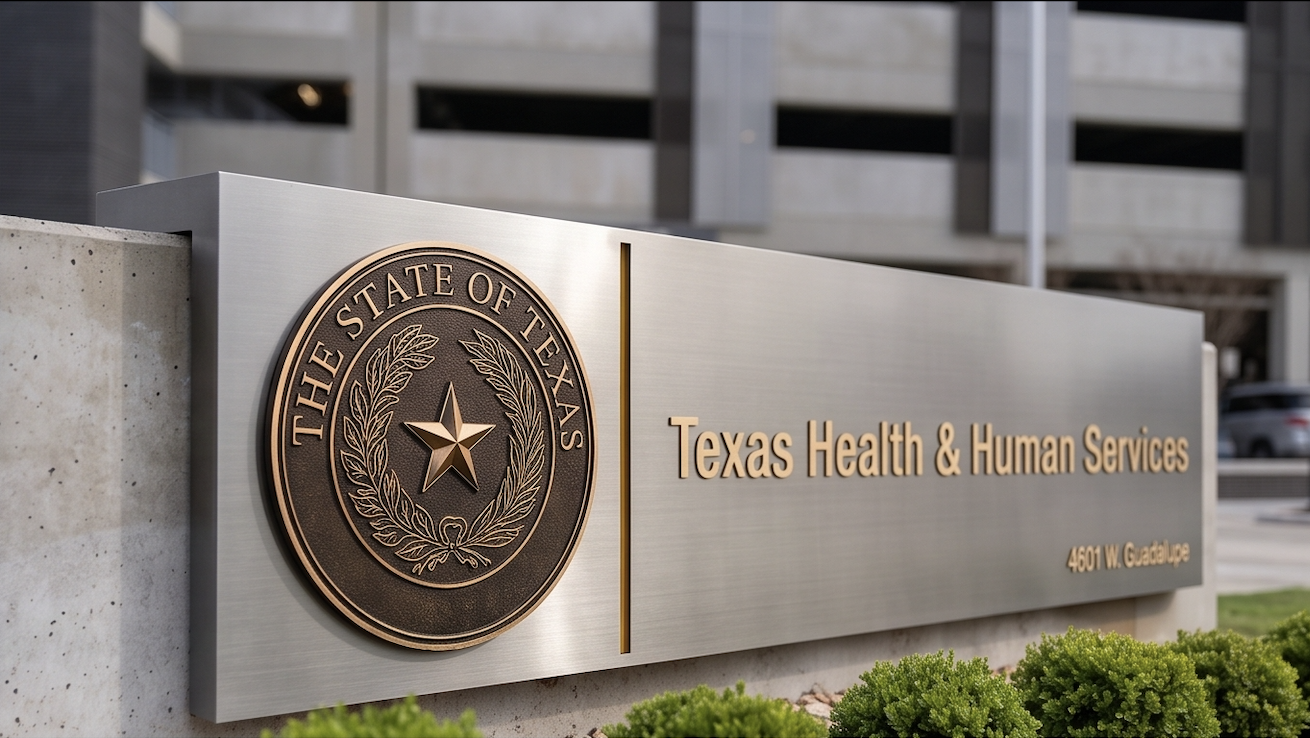
A home health aide, hospice worker or personal-care attendant whom state investigators conclude has abused, neglected or exploited a client would have to be suspended by their employer until every appeal is exhausted, under a rewrite of the licensing rules for Texas home care agencies that the Health and Human Services Commission published Sept. 18.
The agency’s own fiscal note says the employer “may need to hire additional staff on a temporary basis while the staff person is on suspension.” Written comments are due Oct. 19.
The proposal reaches every licensed home and community support services agency in Texas, the businesses that send nurses, aides and attendants into people’s homes for home health care, hospice care and personal assistance. It rewrites, adds or repeals more than 100 sections of 26 Texas Administrative Code Chapter 558 to carry out five laws passed in 2023 and 2025, “to prescribe and streamline HHSC’s process for investigating allegations of abuse, neglect, and exploitation of clients,” and to catch the rules up with telehealth and electronic records.
The suspension requirement is not new law. House Bill 1009 by Rep. Chris Turner, D-Grand Prairie, took effect Sept. 1, 2023, and wrote into Health and Safety Code §253.0025 that a facility “shall suspend the employment” of an unlicensed employee HHSC finds has engaged in reportable conduct “while the employee exhausts any applicable appeals process.” What is new is that HHSC is only now writing the mandate into the licensing rules agencies are inspected against, three years after it became law. The proposed rule tracks the statute nearly word for word and adds that the agency “may not reinstate the person’s employment or contract during the course of any applicable appeals process.”
“Reportable conduct” is defined in the same chapter of state law: abuse or neglect that causes or may cause harm, sexual abuse, financial exploitation of $25 or more, and emotional or verbal abuse that causes harm. The finding that triggers a suspension is HHSC’s own, made after its investigation and before the worker has had a hearing in front of an administrative law judge. The rule does not say whether the suspension is paid or unpaid; that is left to the employer.
HHSC acknowledges the cost lands on the agencies, many of them small businesses. Its small-business analysis, signed by Victoria Grady, deputy chief of finance, says an agency “may incur a cost if the agency suspends an agency staff person while due process takes place,” and that HHSC “lacks sufficient information to estimate the number” of agencies that are small or rural. The commission considered and rejected softer alternatives for small businesses because they “would not be consistent with ensuring the health and safety of persons receiving services” and because “the content of the rule is necessary to implement HB 1009.”
The fiscal note also projects more money flowing to the state. It says “the new security violations could result in a fee between $100 – $1000 per violation,” though the rule text never uses the phrase “security violation.” The penalty schedule the proposal amends uses two tiers: Severity Level A, $100 to $250 for a violation with “minor or no client health or safety significance” that goes uncorrected, and Severity Level B, $500 to $1,000 for one that “results in serious harm to or death of a client.” HHSC says it cannot estimate the revenue because it does not know how many violations it will find.
The suspension rule rides alongside a new background-check system. Under a 2023 law that created what HHSC calls the Search Engine for Multiple Agency Reportable Conduct, agencies would have to search that registry and the nurse aide registry before hiring anyone who may have contact with a client, again every 12 months, and for volunteers and contractors as well. An agency “must immediately stop using the services” of a volunteer found on the registry as unemployable.
Other pieces of the package reach clients directly. Reports of abuse, neglect and exploitation would go to HHSC instead of the Department of Family and Protective Services, and “immediately” would mean within one hour. Every agency with two or more registered nurses would need a written workplace-violence prevention plan under Senate Bill 463 from the 2025 session. A new telehealth division would bar an agency from requiring remote services “if the client’s preferred service delivery method is in-person and in-person services are available.”
Some changes cut the other way for providers. The $500 penalty for an advance-directive violation “without an opportunity to correct” would be deleted, and the follow-up inspection within 18 months of an initial license “may (rather than must)” be conducted.
HHSC lists the proposal as rule 22R045, a number that indicates the project was opened in 2022. Comments go to HHSRulesCoordinationOffice@hhs.texas.gov with “Comments on Proposed Rule 22R045” in the subject line by Oct. 19. After that, the executive commissioner decides whether to adopt the rewrite as written or change it, and the next public step is an adoption notice in the Texas Register.