
The fender bender that cost a Central Texas trucking company a fifth of its workforce began as a $3,000 repair.
One of the company’s trucks — it services gas stations and truck stops — was in a minor collision. The insurer replaced a bumper, and that was that. Nearly two years later, days before the two-year statute of limitations expired, the company was sued for $1 million over medical damages that, according to Ryan Patrick, had not existed at the time of the crash. The insurance carrier wrote a check for $600,000.
Then came the part that reached the payroll. The company’s annual premium went from $250,000 to $750,000 over two years. The owner laid off 20 percent of his employees and shelved plans to expand. He had never been involved in politics. He has since testified at the Capitol.
“That’s the kind of guy who then is down the street here testifying about what this does to small businesses,” says Patrick, who took over in January as chief executive of Texans for Lawsuit Reform. “And we have tons of these.”
It is the anecdote Patrick uses to make an argument that will be central to the 90th Legislature: that what happens in a handful of Texas courtrooms is showing up on the insurance bills of Texans who will never see the inside of one.
The mechanism
The claim rests on a proposition about how insurance works that is not really in dispute — insurers price risk, and they spread it.
“The one thing insurance companies are really good at is pricing in risk,” Patrick says. “They see the trends. They see they’re writing the checks.”
What follows, in his telling, is geographic redistribution. Verdicts concentrated in a few urban counties get priced into premiums across all 254. “Whether you’re in El Paso or you’re in Texarkana or you’re in Lubbock or Amarillo, you’re paying for these nuclear verdicts,” he says — using the industry’s term for jury awards of $10 million or more. “That’s how the risk pool is spread.”
His estimate of the per-person cost runs from $3,200 to $4,000 a year, a figure he attributes to varying industry sources. That is higher than the most widely cited published study: research by the Waco-based Perryman Group, released in March 2025 for Citizens Against Lawsuit Abuse, put the Texas “lawsuit tax” at $1,725 per person annually — above the national average of $1,666, and up 55 percent from the same firm’s 2021 estimate. Perryman found the burden concentrated in metros, at $2,746 per person in the Austin area, $2,483 in Dallas-Fort Worth and $2,373 in Houston.
Patrick’s frustration is that the connection is rarely drawn at all. Everyone understands that when diesel gets more expensive, everything shipped by truck gets more expensive. “We have done a poor job linking insurance premium rate increases to increased costs,” he says — pointing to commercial property owners facing 20 to 25 percent annual increases. “Not that your property is any less safe than it was last year.”
The man making the argument
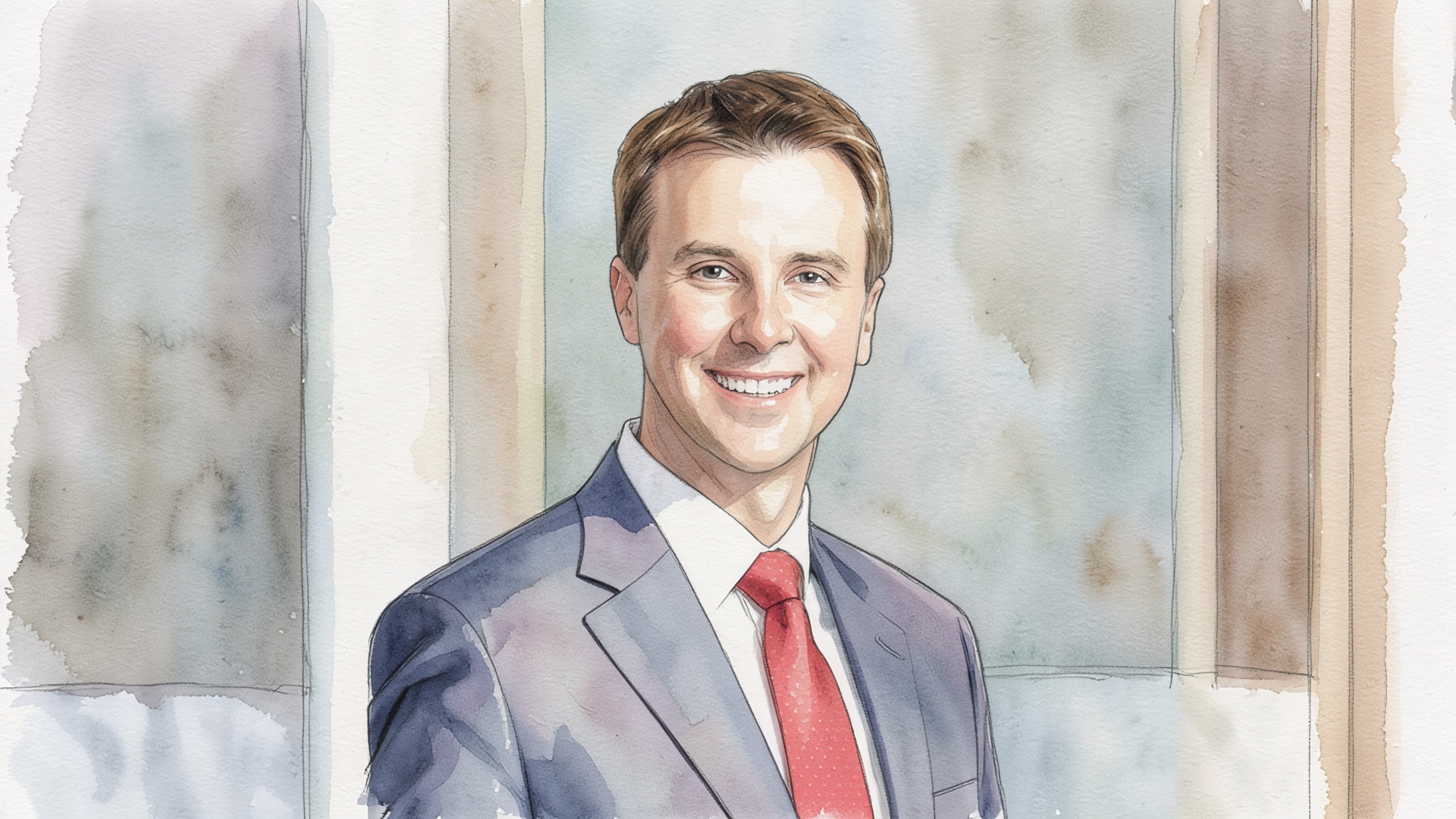
Patrick brings an unusual resume to the argument, and one piece of context he does not volunteer: he is the son of Lt. Gov. Dan Patrick.
A Baylor and South Texas College of Law graduate, he spent roughly six years as a Harris County prosecutor. In 2012, while already the party nominee for a district court seat vacated mid-term, Gov. Rick Perry appointed him to the 177th District Court, making him the youngest district judge in Texas at the time. He won that fall, lost in the 2016 sweep, and in 2017 was nominated by President Donald Trump to serve as U.S. Attorney for the Southern District of Texas — 43 counties from Huntsville to Laredo — a post he held from 2018 to 2021. Five years as a partner at Haynes and Boone in Houston followed, doing investigations and civil work, before TLR recruited him.
“I have sat on kind of all the different legs of the stool,” he says. He has served alongside judges of both parties, appeared before them, and sat next to them.
He also arrives as a generational handoff. TLR was founded in the mid-1990s by Houston homebuilder Dick Weekley, who was 47 at the time; Patrick is 47 now, and most of the organization’s longtime operational leadership is 80 or older. He briefly used the phrase “TLR 2.0,” which he has since retired, but the substance remains: new board members, a different generation, and what he describes as a return to the organization’s founding subject after years of drift.
“Focus back on civil justice reform, back on tort reform,” he says. That includes a deliberate narrowing on the political side — supporting legislators who share the group’s policy positions rather than recruiting candidates. “We are not out trying to recruit candidates. That’s not what we’re going to do.”
What the numbers show — and where they’re contested
The trend line on large verdicts is real. A Marathon Strategies study released this August found nuclear verdicts against corporate defendants rose 40.7 percent in 2025, with Texas among the states carrying the heaviest totals — 29 such verdicts adding up to roughly $3.3 billion in a recent year.
Texas drivers have also absorbed steep increases. The average full-coverage auto premium in Texas ran about $2,470 a year as of December 2025, up nearly 58 percent from four years earlier.
But the picture is more complicated than a straight line from verdicts to premiums, and a fact-based accounting has to say so.
The causal link itself is genuinely disputed. Consumer Federation of America and Americans for Insurance Reform research has long held that states with strict limits on lawsuits see roughly the same premium patterns as states without them, and the American Insurance Association has acknowledged the industry “never promised that tort reform would achieve specific premium savings.” Some academic work finds modest effects — on the order of 1 to 2 percent per reform. And Marathon’s own analysts attribute part of the verdict surge to a generational shift in juries, with millennial and Gen Z jurors less inclined to side with corporate defendants — a different causal story than courtroom tactics.
Patrick also faces the argument that large verdicts make Texas safer by forcing better behavior. He pushes back with the industry’s own record: insurers have pressed trucking companies to install cameras and telematics, and “it hasn’t stopped the lawsuits.” Worksites, he argues, have never been safer, and roads and vehicles have improved, “but the verdicts are going up.”
He offers one statistic on that point: that nearly 80 percent of Texas traffic accidents end up in litigation of some form, compared with roughly 50 percent in California. He notes most never reach a jury — they simply cannot be resolved on the front end.
His sharpest point may be the one about who ends up unprotected. Rising premiums, he argues, are pushing families to drop coverage entirely — a Houston television station reported this year on households choosing between car insurance and rent — which enlarges the uninsured pool and raises costs for everyone still paying in. “It all builds on itself.”
The medical damages fight
The specific reform Patrick intends to pursue concerns how medical bills reach a jury, and it is a rerun. Senate Bill 30 died in the closing days of the 2025 session after the House and Senate could not agree; by the end, the bill had been stripped of its damages provisions entirely. It was a significant defeat for TLR.
The mechanism Patrick describes works like this. Crash reports are public records, which makes accident victims easy to identify and solicit. A claimant gets routed to a particular physician, often one whose practice is built substantially on litigation patients. That doctor typically works under a letter of protection — meaning he isn’t paid until the case resolves, which gives him a stake in the outcome. Billing accumulates: imaging here, therapy there, sometimes procedures, plus projections of future care. And the rates charged, Patrick argues, bear little relationship to what anyone actually pays for the same service in cash.
“Most judges do not require any discovery on what the relationships are between that doctor and between that lawyer,” he says.
SB 30’s answer was disclosure rather than caps: when a medical bill goes to a jury, send an itemized version alongside benchmarks — the Medicare reimbursement rate for the same services, and a percentile of private-pay rates. “Jury, here’s a million dollars here, and what could have been $50,000, $65,000, $70,000,” Patrick says. “And jury, you make a decision.” He points to a University of Texas database of anonymized payer data by ZIP code, built partly through earlier legislation, as a tool that now makes those comparisons feasible.
That disclosure requirement, he says, is what the trial bar fought hardest.
He is careful about the boundary. “We are not trying to prevent anybody who is legitimately damaged from recovering,” he says. And he notes a consequence for plaintiffs that gets little attention: seriously injured people sometimes borrow against their cases at interest rates that fall outside Texas usury law, and can end up owing more than they recover.
The rest of the agenda
Several other items are on TLR’s list for January.
Criminal actors. Patrick wants to codify a rule requiring someone injured while breaking the law to bear at least 50 percent of the responsibility. His example is the Union Pacific case: a Houston woman who fell asleep on railroad tracks in 2016 and was struck by a train, suffering catastrophic injuries. A jury returned about $557 million in 2023; the trial court reduced the judgment to roughly $73.5 million under proportionate-responsibility rules and caps. This June, a Texas appeals court reversed and ordered a new trial, holding the jury should have been instructed on gross negligence — the standard applicable to a trespasser — rather than ordinary negligence.
Staging accidents. Patrick says Texas has no standalone offense for staging a collision, though he acknowledges prosecutors can reach the conduct through insurance fraud and other statutes. What’s missing, he argues, is a single charge that captures everyone involved — the drivers, the recruiters, the participating professionals.
Negligent entrustment. He wants to codify limits on how far liability can travel up a contracting chain — when a retailer hires a delivery company that subcontracts twice more, and the eventual driver crashes — pointing to a recent Texas Supreme Court decision he considers correct.
Insurance fraud prosecution. The Texas Department of Insurance already funds an attorney deputized by the Travis County district attorney to handle workers’ compensation fraud. Patrick wants that model extended and funded across more counties. He says a former TDI investigator told him the hardest part of the job was finding a prosecutor with the bandwidth to take a fraud case.
Why he thinks the stakes are competitive
Patrick’s closing argument is about Texas’s standing relative to states pursuing the same business.
He recounts hearing Gov. Greg Abbott tell an audience that CEOs considering relocation have begun raising litigation risk with him. He cites the CEO of San Antonio-based USAA, on CNBC over the summer, declining to criticize California without first acknowledging his own backyard — and naming Harris County among the worst jurisdictions in which his company litigates. He describes a call with a large multi-state company, headquartered in north Harris County, whose executives said the same thing, and whose venue exposure could be solved by moving a few miles north into Montgomery County.
Meanwhile, he notes, Georgia and Florida have moved aggressively on litigation reform, and insurers there have announced rate reductions and rebates.
“We may think everything’s bigger and better in Texas, and it is,” he says. “But Georgia and Florida and Nevada and other states are looking at Texas as well.”
He concedes TLR’s own share of the blame for SB 30’s failure — members told him afterward they hadn’t understood what the bill did. This time, he says, the bills will be narrower and the explanations better.
“I don’t want everybody to understand — I want everybody to understand what we are trying to do,” he says. “We’re not trying to hide the ball.”