
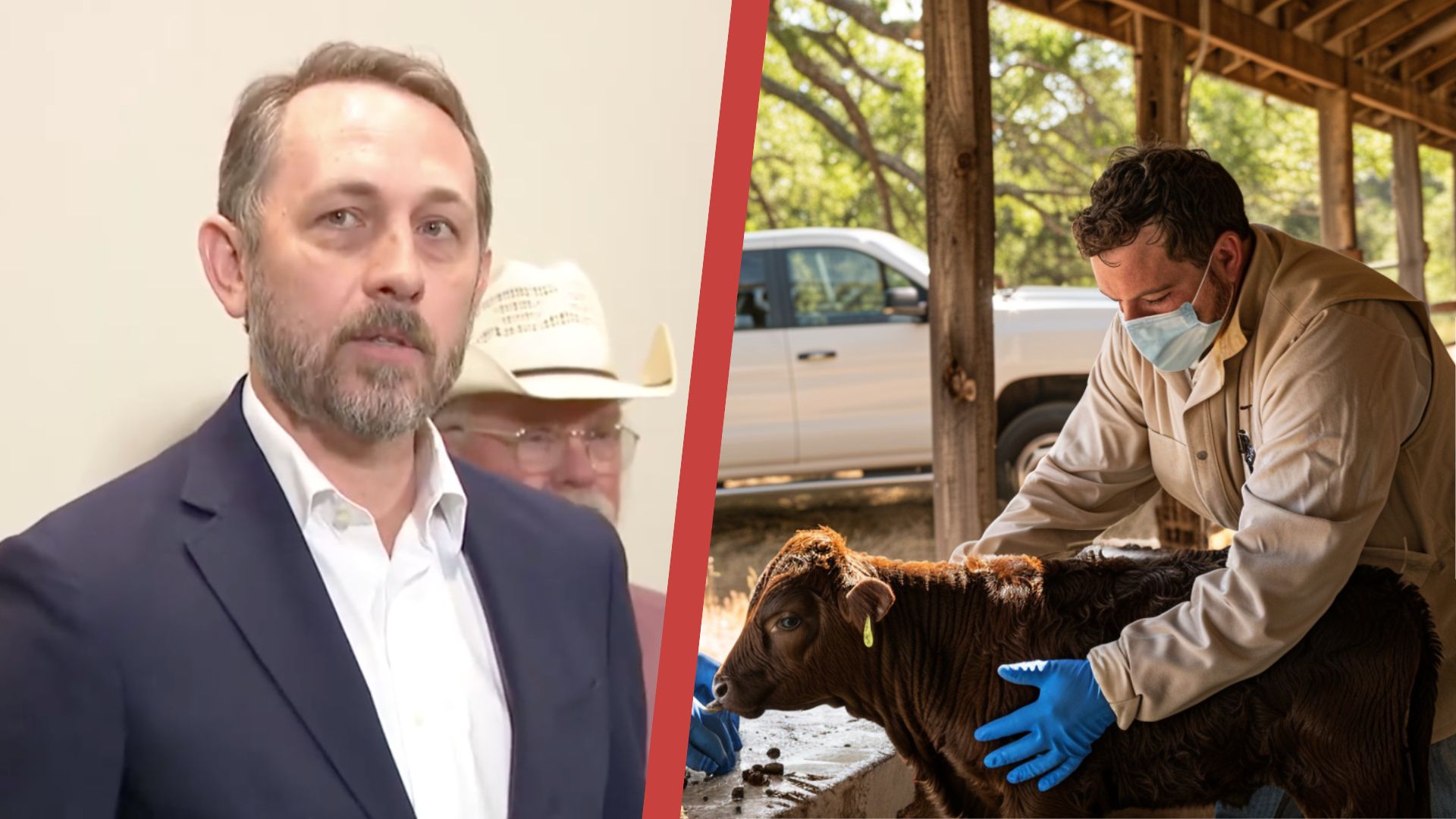
Two Central Texas counties have issued local disaster declarations regarding the New World screwworm despite having no confirmed cases within their borders. The preventative actions extend the regional agricultural and governmental response into the Austin metropolitan area and the eastern edge of the Texas Hill Country.
Travis County Judge Andy Brown signed his county’s declaration during a press conference on Friday morning, characterizing the move as a proactive measure designed to coordinate local resources, streamline communication with state and federal agencies, and prepare personnel for a rapid response if the pest is detected locally.
Caldwell County, located directly south of Travis County, is issuing a companion declaration on the same preemptive basis.
A local disaster declaration grants county governments the authority to accelerate emergency procurement procedures, opens up direct access to state and federal contingency funding, and increases public awareness of the biosecurity risk.
Local administrators indicate that the preemptive actions reflect a strategy that treats regional detection as an inevitability rather than a possibility. The county-level measures mirror the broader statutory framework established by Governor Greg Abbott in a statewide disaster proclamation, applying identical emergency postures to the municipal areas surrounding the state capital.
The New World screwworm is a parasitic fly whose larvae burrow into and feed upon the living tissue of warm-blooded hosts. The female fly deposits eggs within open wounds or natural body orifices, such as the eyes, nose, ears, and mouth, where the hatched larvae mature while consuming muscle and dermal tissue.
According to situational updates from the Centers for Disease Control and Prevention (CDC), the parasite poses a threat to domestic livestock, regional wildlife populations, household pets, and, in rare instances, humans.
The biological threat introduces economic volatility into the Texas cattle sector, an industry that generates approximately $41 billion annually, according to agricultural tracking by The Texas Tribune. The domestic re-emergence follows a severe outbreak in Mexico, where Mexican agricultural authorities have documented nearly 28,000 active cases since November 2024.
Domestic detections of the screwworm have increased since the United States Department of Agriculture (USDA) confirmed the initial case in a three-week-old calf in Zavala County on June 3. Total confirmed domestic cases have risen to eight, with all but one detection occurring within Texas borders. While the confirmed infections have primarily impacted cattle herds, verified cases also include two goats and one domestic dog.
In response to the data, the Texas Animal Health Commission (TAHC) is enforcing an animal quarantine across designated portions of 10 counties: Edwards, Gillespie, Kerr, Kimble, La Salle, Sutton, Uvalde, Val Verde, Webb, and Zavala. Although neither Travis nor Caldwell County is currently included in the TAHC quarantine zone, the state regulatory boundaries are impacting operations within the Austin area.
Austin Wildlife Rescue announced it has ceased accepting warm-blooded animals originating from any of the 10 quarantined counties to limit the geographic transport of the pest. To establish local baseline monitoring, Travis County’s natural resources division has deployed remote wildlife cameras and initiated field observation protocols to track native animal populations for unusual behavior or visible physical trauma, following standard guidance from the Texas Parks and Wildlife Department.
On the public health front, medical professionals emphasize that human infestation risks remain low. However, Dr. Desmar Walkes, the Austin-Travis County health authority, noted that local healthcare networks are actively instructing area medical providers on identification, reporting, and treatment protocols.
Clinical guidelines direct medical staff to look for progressing sores, worsening wounds, localized bleeding, and foul odors. Providers are instructed to collect larvae samples from any suspected human case, isolate them, and transmit the biological specimens to the Texas Department of State Health Services for genetic verification.
Caldwell County Judge Hoppy Haden, who operates a private cattle ranch, used the joint briefing to address reports of compliance reluctance within the agricultural community. Haden noted that some independent producers have expressed an unwillingness to report suspected infestations due to the operational impacts of mandatory quarantines. He urged livestock owners to immediately report any potential cases to the TAHC, stating that rapid notification is critical to regional containment and resolving the outbreak.
Tracking will monitor whether adjacent counties in the Austin-Round Rock metropolitan area or the wider Hill Country enact similar preemptive disaster declarations. Key milestones include whether the TAHC expands its 10-county regulatory quarantine zone, the documentation of any initial screwworm cases within Texas wildlife populations, and official updates to the USDA’s domestic case registry.